Órbitas is to date, the largest of both Bowie's studio projects and land rehabilition works, and the subject of various artworks she created. It was inspired by and followed the
East 5th studio house (1991-2010, where band practices and recordings, resident artists, reading groups, wine making and regular garden gatherings were centered) and would later inform the Sitges, Barcelona Qurk Studio from 2021-2022,
each in turn, functioning as Bowie's sound, writing and art studios.
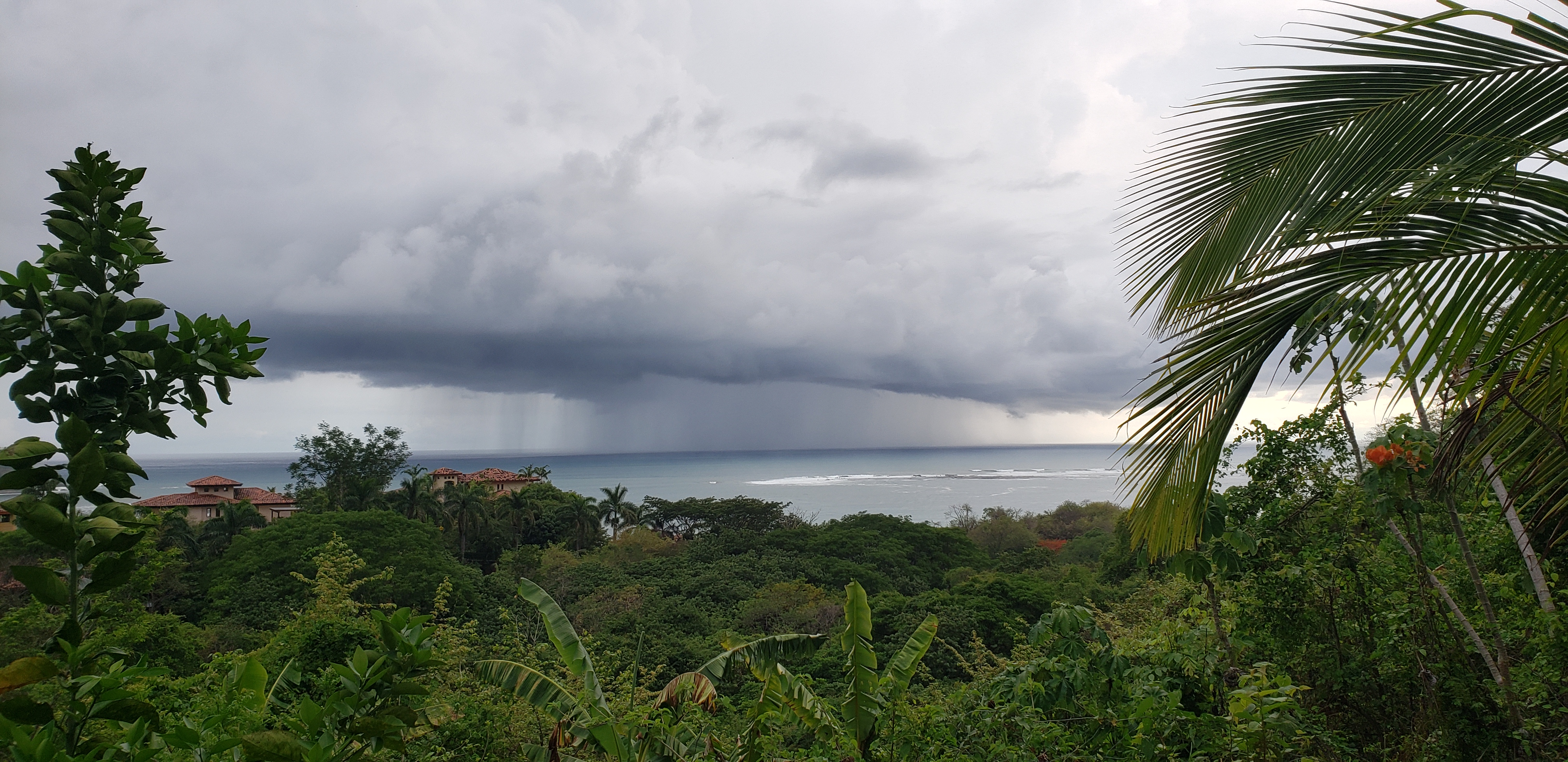
Located above Sámara, Costa Rica, the Órbitas facility was conceived, designed and directed by Fiona Bowie.
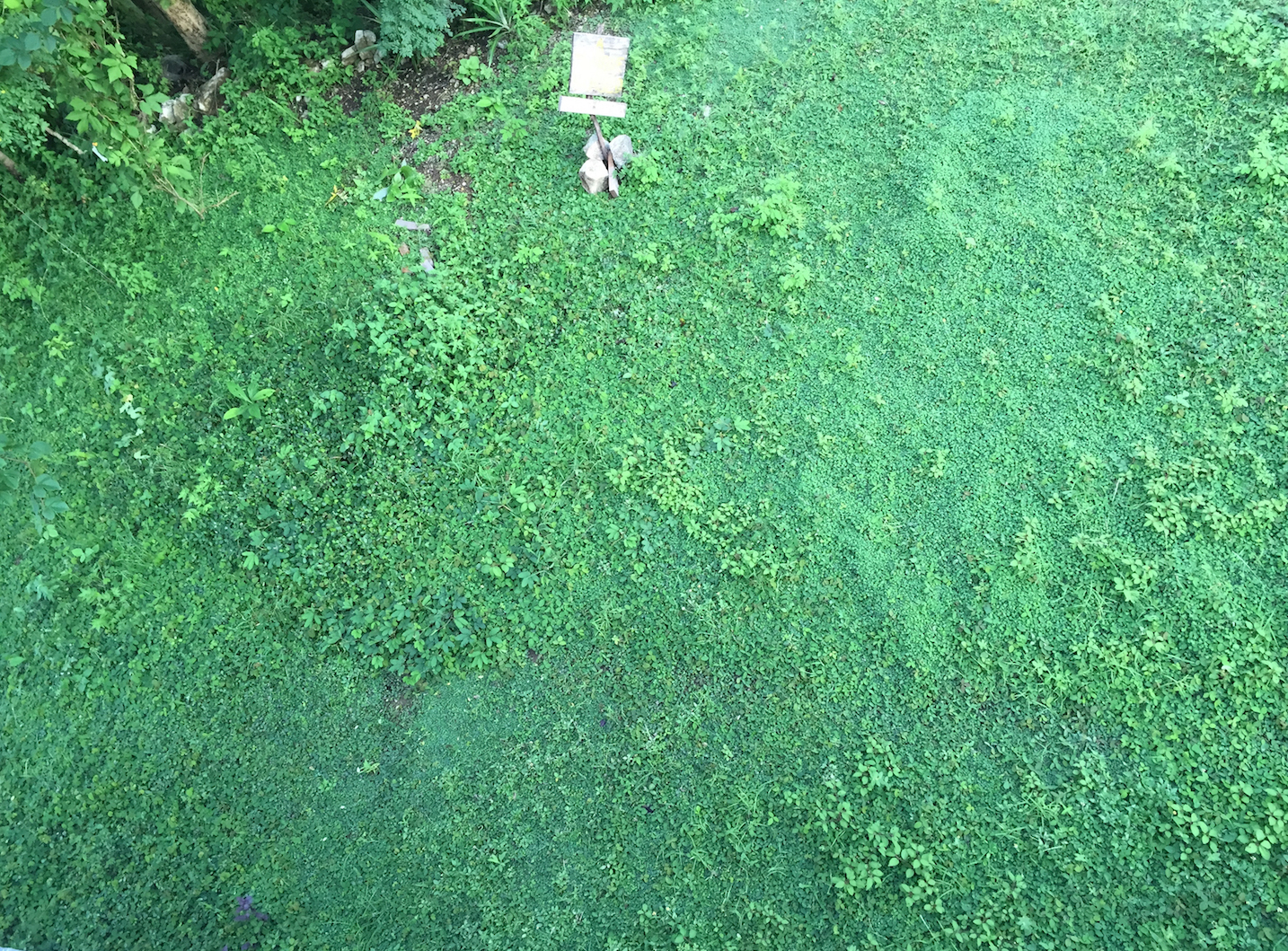
The previously razed and subsquently compacted lot was inundated with an invasive non-indigenous plants species (thatch grass), otherwise devoid of flora and fauna. Upon visiting it,
Fiona was determined to save it from developers and re-establish the diversity of local flora and fauna. It was painstakenly hand weeded by the artist over years to encourage the
return of myriad species.
After 12 years, the rebuilding of the soil, tierra, jungle and gardens was fully established.
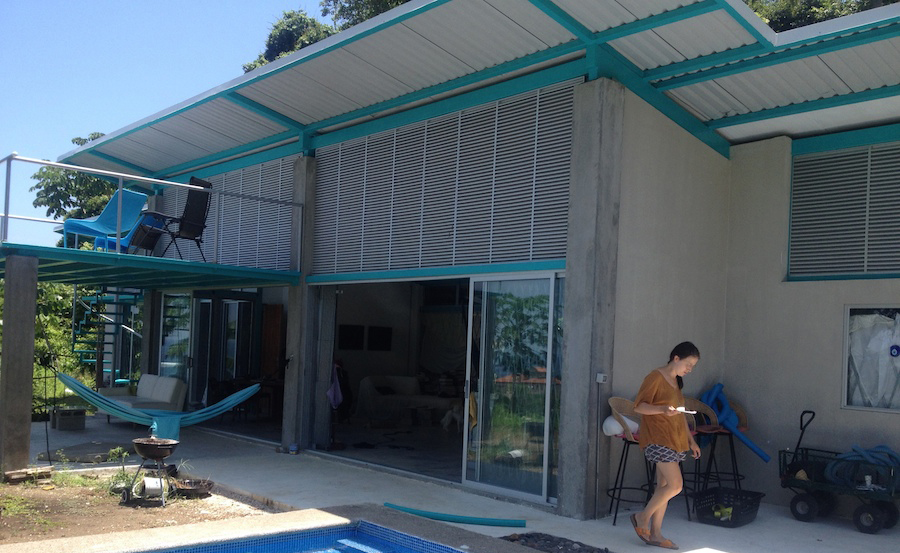
The building, designed by Fiona with Architect Karin Nagel, was constructed in typical tropical fashion with an open sofit area to promote airflow. This encouraged the outside
in–– literally. Every manner of insect, reptile, and birds welcomed themselves in on a regular basis. A pair of Rufous Naped Wrens (Campylorhynchus rufinuch) insisted
on nesting and raising young in the living/open studio area, utilizing a small convex mirror hanging from the ceiling as a base for the nest (video footage is part of the archive).
Tree Frogs, Anoles, Geckos were frequent inhabitants. Rain tree frogs would periodically use the shower areas as refuge during the dry season.
Several species of ants colonized the storage area's boxes, and Scorpians, Tailess Whip Scorpians, and bashful, mellow Tarantulas would stake out hideaways inside
(behind books, under the sink etc.).
This experience is documented in the installation
on 5.972×10^24 kg (Call/Response)(2023). (5.972×10^24 kg is the mass of our planet.)
A link to the archive of the myriad non-human inhabitants of the building and the surrounding rehabilitated areas is in development but this,
Orbitas Archive is where it will live. This will include documentation of the thrice yearly,
three hour invasions of thousands of army ants marching in highly organized 'streams', with their much larger stationary sergeant specimens supervising; with their
heads rotating to and fro, as they surveyed the surroundings for any predators. They also performed scent tagging of the passing throngs to direct the traffic of their colony,
who were passing by in swaths from the jungle, to the grounds and into the building. They first scoured the perimiter of the building for prey before scaling the walls en masse
to enter (in spite of the closed screen doors).
"Most often, we had no choice but to abandon the premesis for the duration of their visit. As soon as the first trail of them started, we'd head out as it would
soon balloon into numbers that were staggering, you only needed one bite to realize the danger of accidently stepping on one of their trails. Incredibly, Ant Birds would stalk them
their trails and gorge on them as they hopped gingerly amongst them.
Army ants are known in Costa Rica as cleaner ants: they purge the house of all other insects they can find, forming 'rafts' with their bodies to cart away their prey
to their lair. Every manner of insects are on the menu, including scorpians, and tarantulas if they can corner them (and sadly sometimes geckos).
The large shy, box-favouring red ants could always be seen hiding in plain sight on the glass sliders. Having sensed the approaching menace, they abandon their boxes and climb the glass
doors, holding their eggs in their mouths, frozen motionless for hours, and for the most part, avoiding capture.
Before: when Fiona first walked the property in 2010, it was covered in invasive non-indigenous Thatch Grass that chokes all other flora and fauna.
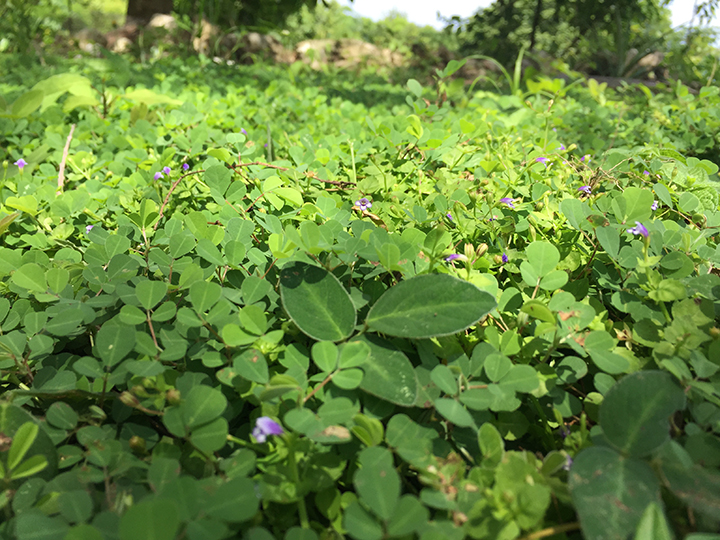
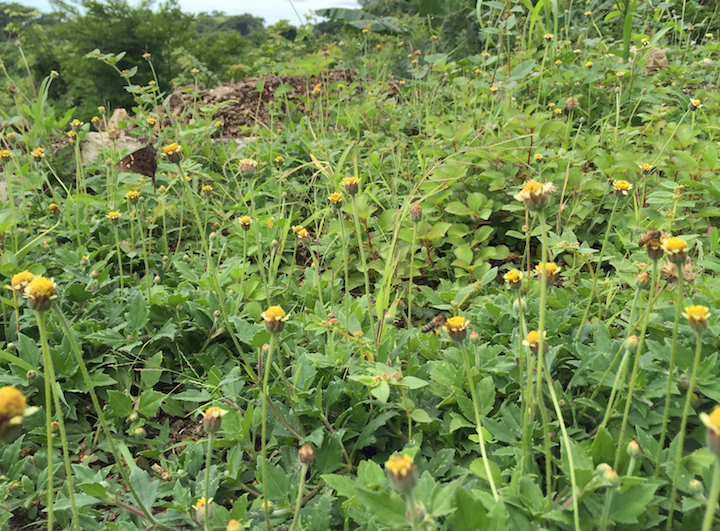
...and after. The wind, birds, reptiles and visiting animals reseaded the flats (2012-ongoing)
jungle and garden areas with myriad plant species.
After only seven years, the breadth and complexity of plant, amphibian, reptile, mammal and insect species re-establishing at Órbitas was legion. Many bird species, (a list
will be included in the archive), including several species of parakeets and parrots, hummers, owls, hawks, vultures, Tinamous, song birds and Chachalacas began
nesting in the rewilded jungle area over that period. As of 2021, because of breeding programs and the release efforts by local Macaw recovery centre located 1/2 hour south
of Órbitas at Punta Islita, the Macaw Recovery Network (formally known as the Ara Project), Scarlet Macaws have also
returned to Órbitas and the surrounding area after a decades-long absence.
Macaws throughout Central America became endangered due to wild capture for the North American and European pet trades (banned in Costa Rica in 2012 for all animals, reptiles
and birds). The breeding pairs at this sanctuary are formally captive pets that could not be released into the wild, but enjoy palacial greened avaries that afford them to
learn to and enjoy flying from tree to tree.
The garden areas
The garden areas very gradually blend into the forest, forming a seamless integration the two. In fact, much of the forest's native trees produced fruit and nuts.
For visitors, this also promoted an understanding of sustainable practices to support wildlife, both flora and fauna.
In the dry season, the integrated garden plants are watered from a 10,000 litre rainwater collection tank fed by roof canoas (gutters) of the residency.
Órbitas also has a bio-dynamic garden and forest garden, promoting the knowledge and use of native medicinals and edible plants and tree fruit, as well as
cultivated culinary plants including herbs, vegetables, many citrus, various types of mango, Cinnamomum verum (Ceylon cinnamon), papaya, cacao, coffee,
coconut, fig, hibiscus and other edible flowers, moringa, starfruit, dragon fruit, melons and other wild fruit.
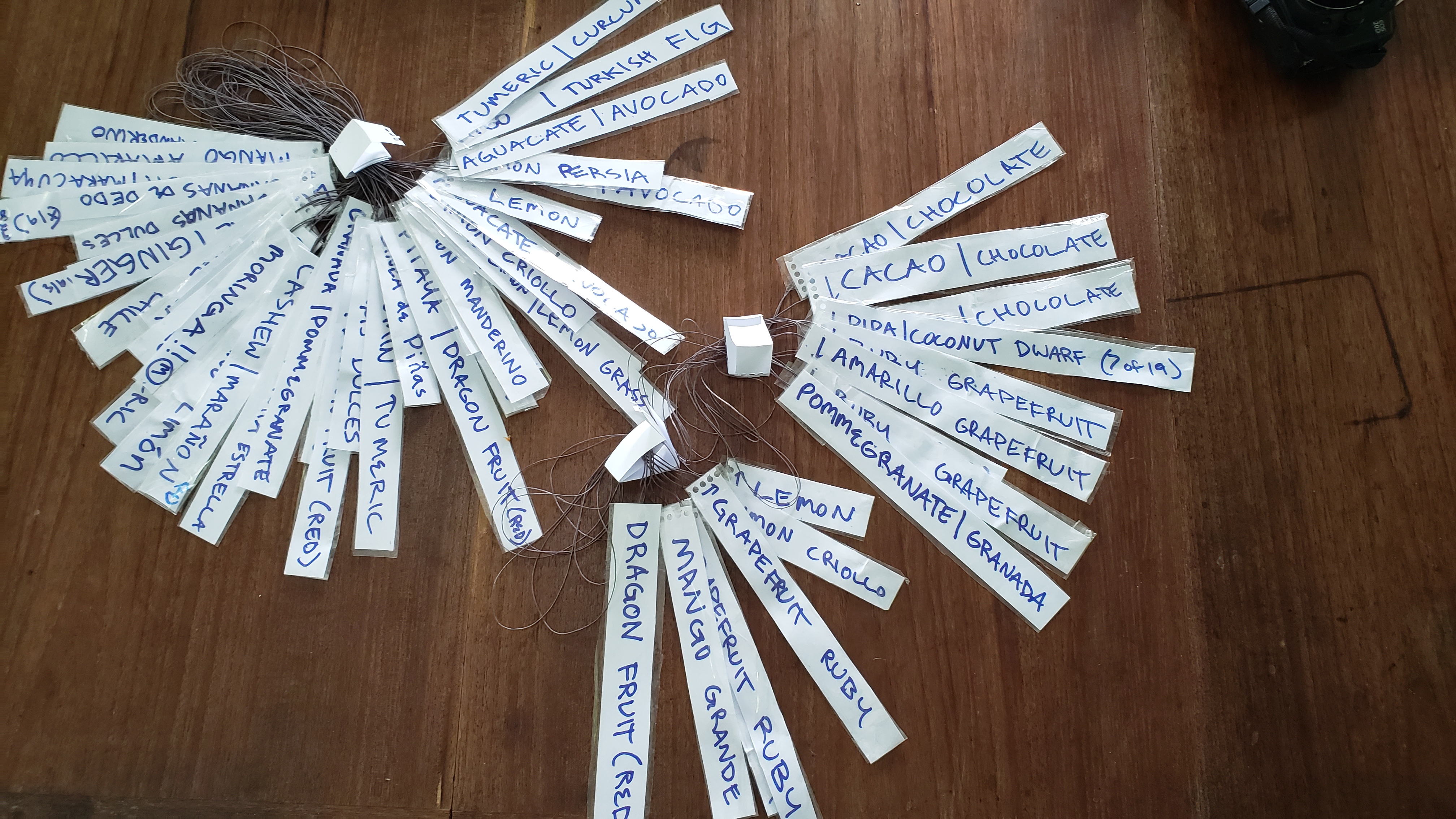
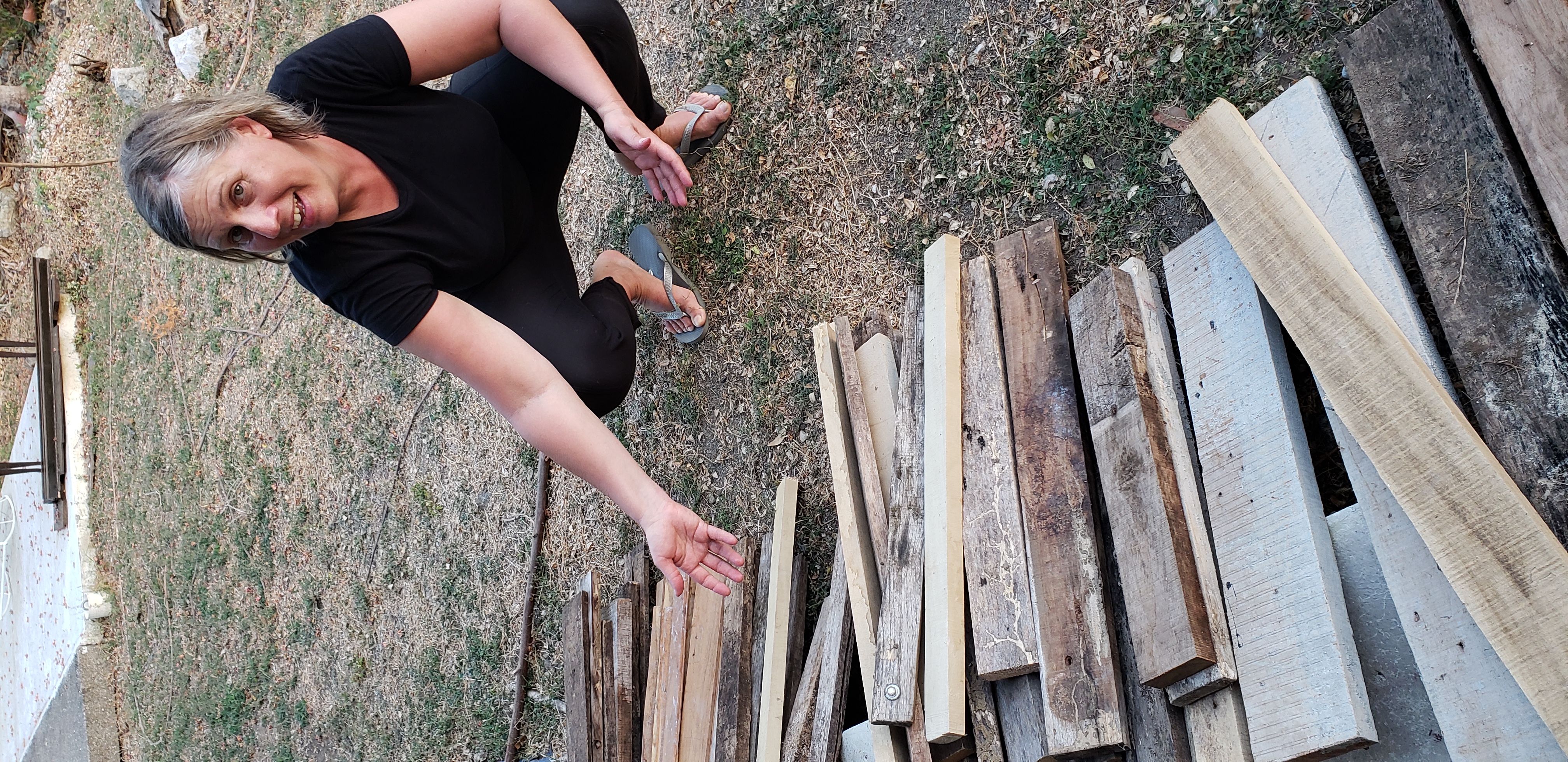
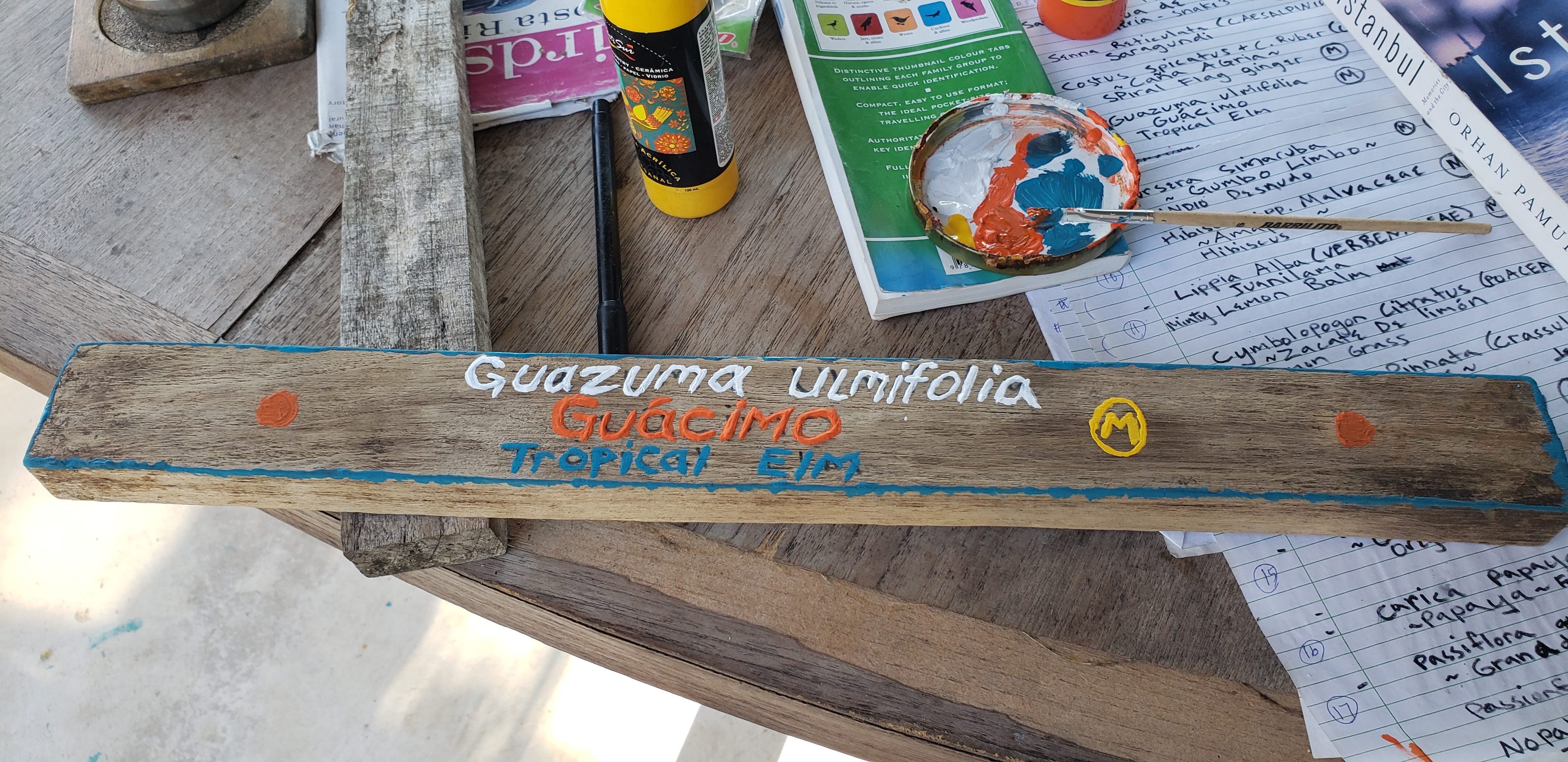
1. temporary plant labels 2. Elizabeth Zvonar, artist in residence, with collected wood scraps for signage. 3. plant signs in progress.
The residency program was curtailed by the pandemic with no new visitors after January 2020. The residency program closed in 2021, but Órbitas and its forest, biodynamic gardens and reclamated flora and fauna are now stewarded by new owners, who have articulated the desire to continue the legacy of the re-wilded property. No poisons nor pesticides of any kind were ever sprayed on the property which flanks the important Debango Forest Reserve and is a short walk downhill from the huge neighbouring William Sauter Forest Reserve.
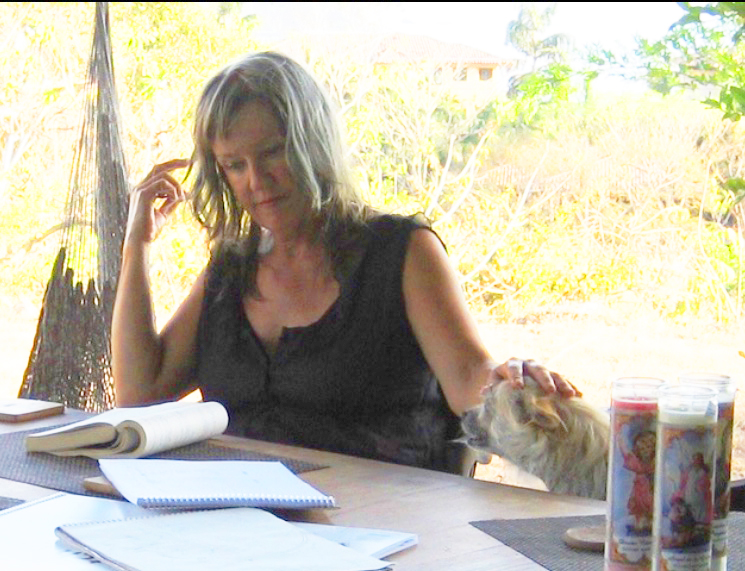
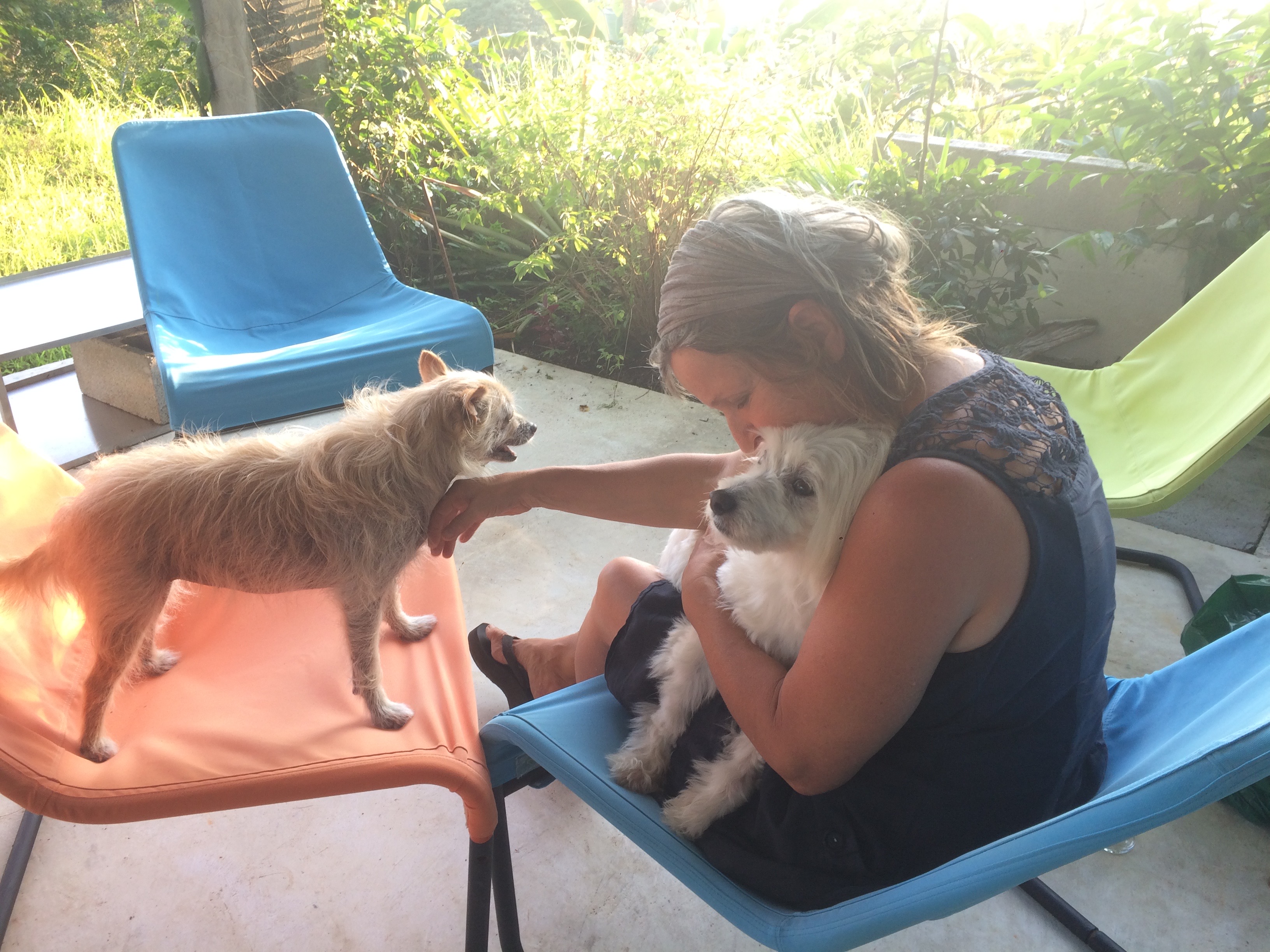
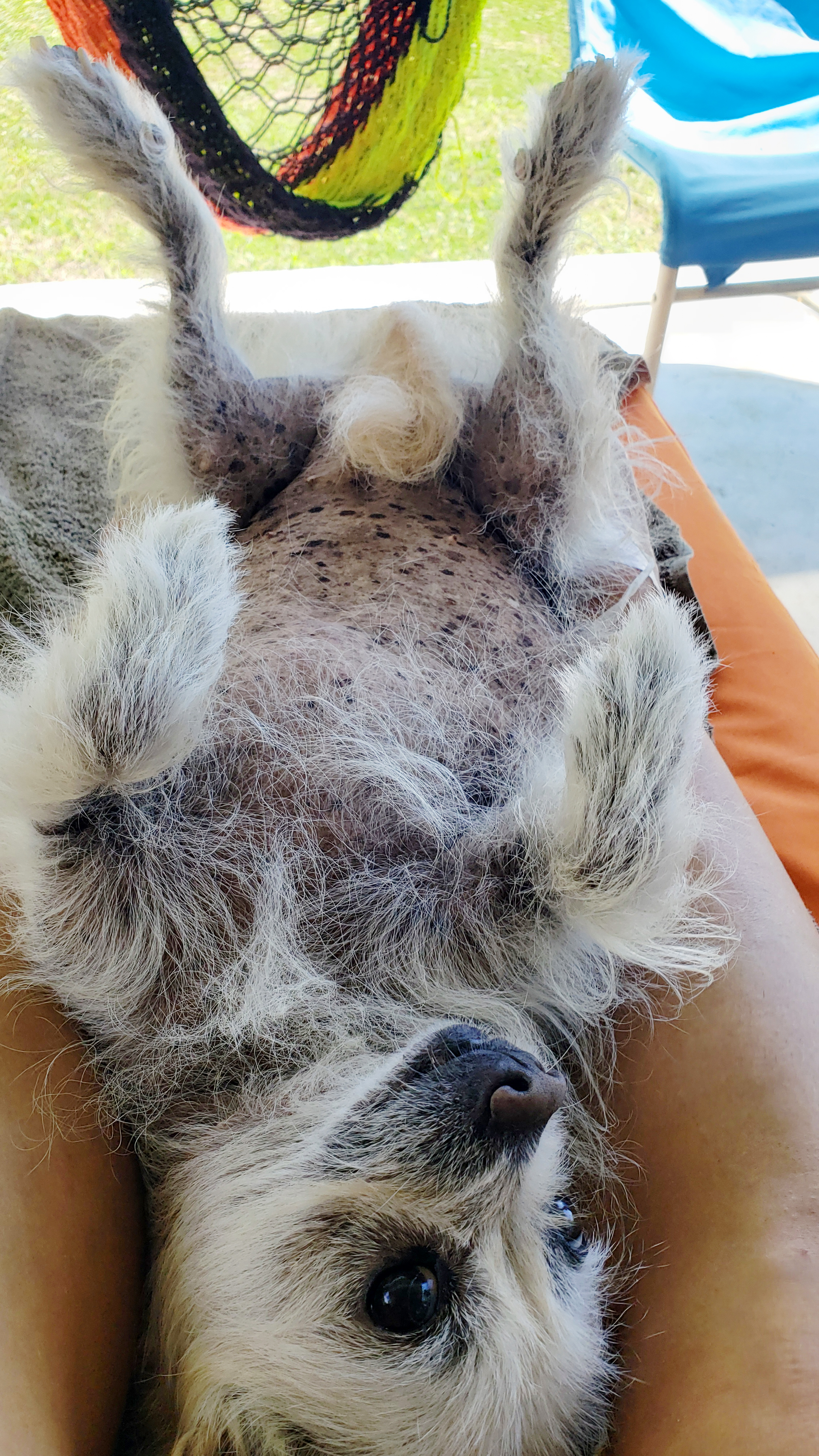
Fiona and Lulu working. &
Lulu and Boo Hugs
Órbitas was a unique residency intended to offer busy creative individuals opportunity to reboot, to play, experiment: supporting research and exploration of ideas that may form the foundation for new works.
Housed on the property of Villa Morpho, Órbitas welcomed International and Costa Rican creative professionals across a multitude of disciplines.
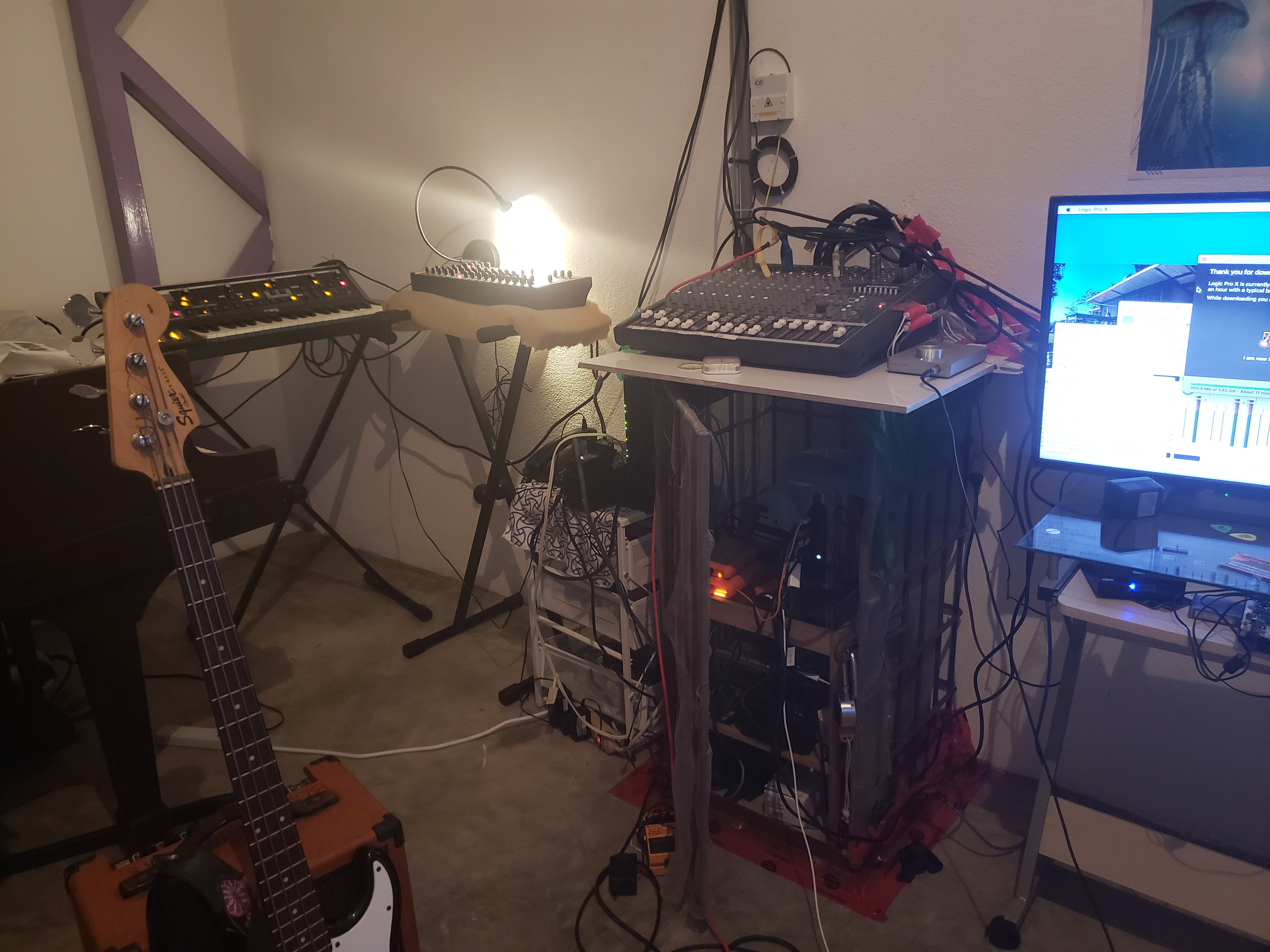
As well as open studio space, Fiona opened her own studio space to anyone needing access to sound or media facilities.
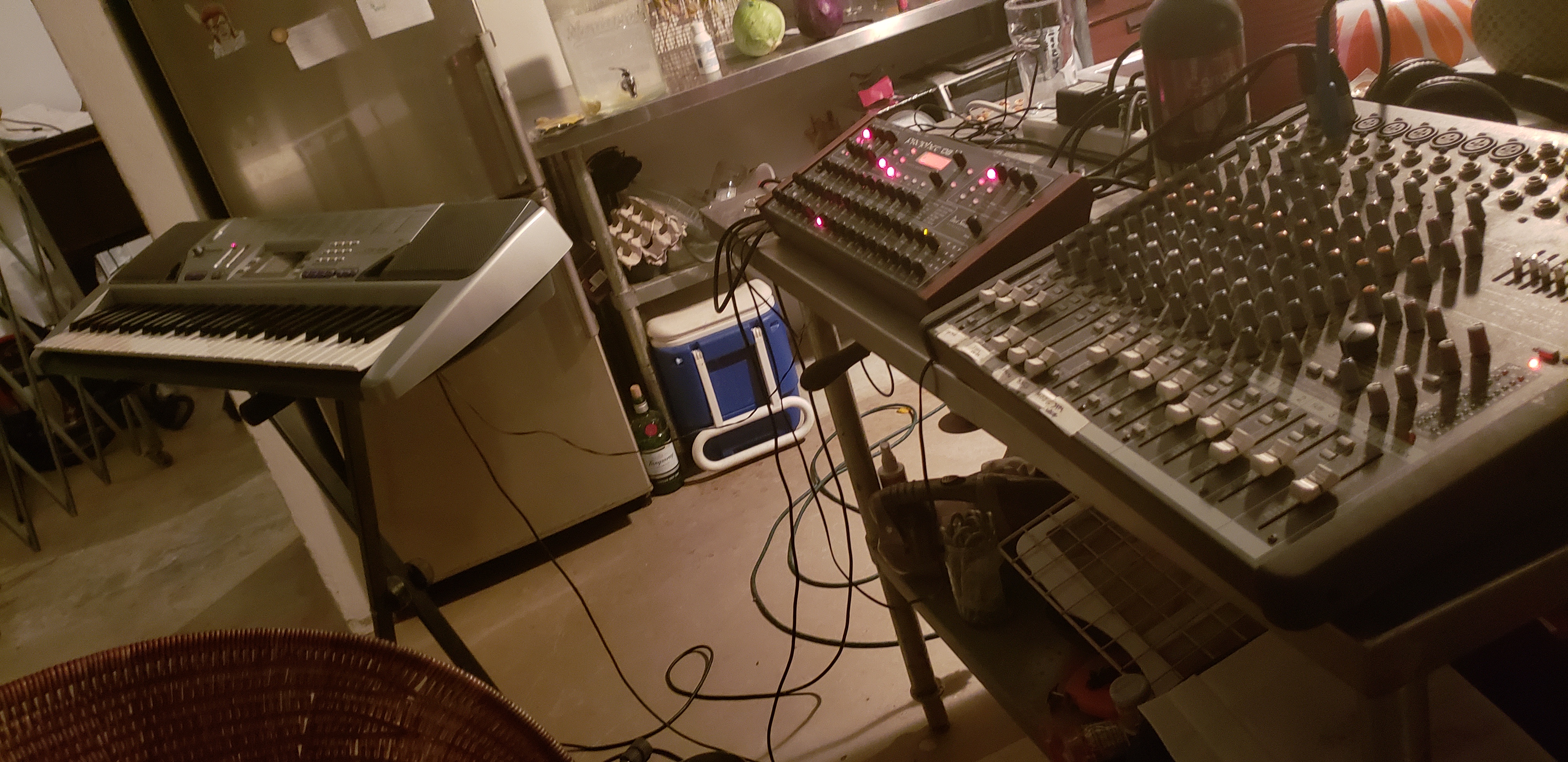
1. back studio 2. kitchen studio jam in preparation for Musicircus.
From here, Fiona and Jim Peers performed an international live feed performance as Slickerslacker, with Fiona on the grounds of Órbitas and Jim in the lobby of the upper gallery for Musicircus, at the Polygon Gallery in 2019.
Órbitas' locale and grounds have been designed to encourage a slowing down: time and space to think, pause, conceive.
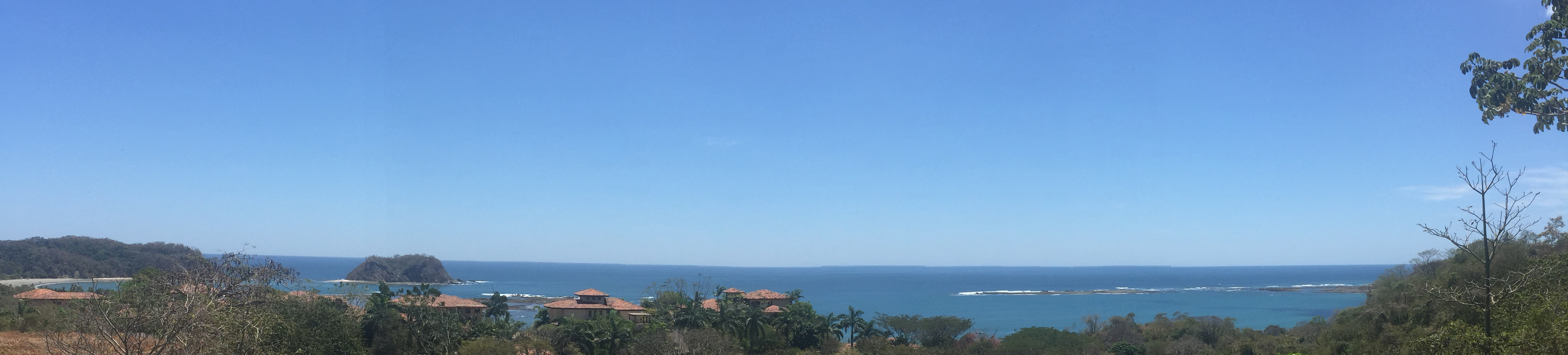
The location also offered opportunities to experience local culture, wildlife, various activities, ocean views and dips,diverse settings for walks. The forest air, ocean breezes and abundant flora and fauna that make up Órbitas' natural setting, provide a restful environment.
Individuals taylored their stay by curating their residency: choosing who might occupy the facility during their stay and complement their creative threads. Collaborative sessions were also encouraged. A media and larger studio was available to support research and development of work and media based explorations. The main space of the residence was also available for larger works, installation or exhibition.
Visiting artists were welcomed to present their work via artist talks, school visits, performances, public work or concerts in Samara
to the local and visiting public.
Residency Living quarters
The two residency guest rooms each had two queen beds, a fridge, safe, desk, ensuite bathrooms and sunny front and shady back patios. Other living areas are communal and include the kitchen, patios, studios, library, upper deck saltwater pool, a large dining/conference table- suitable for spreading out documents and an open living are suitable for movement/rehearsals/workshopping/experimentation.
Being at the edge of a large forest reserve, Villa Morpho offered great bird watching opportunities. The beach was a 10 minute walk down a road adjacent to Órbitas Lane. The town, a further stroll of about 10 minutes on the beach.
Due to the reefs, Sámara is an excellent place for water sports: Kayaking, SUP, beginners surfing, swimming and excellent snorkling.
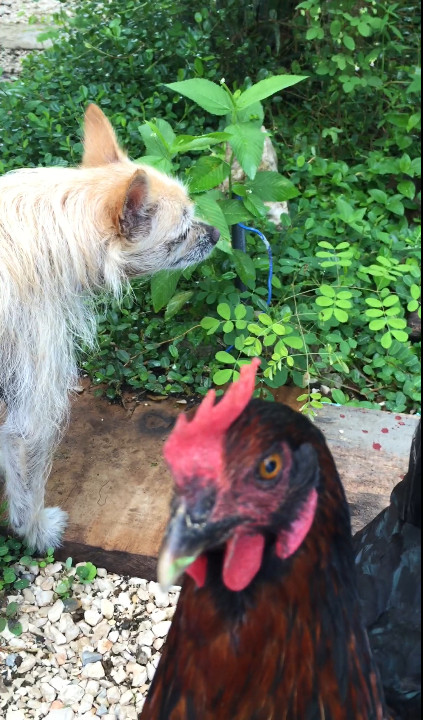
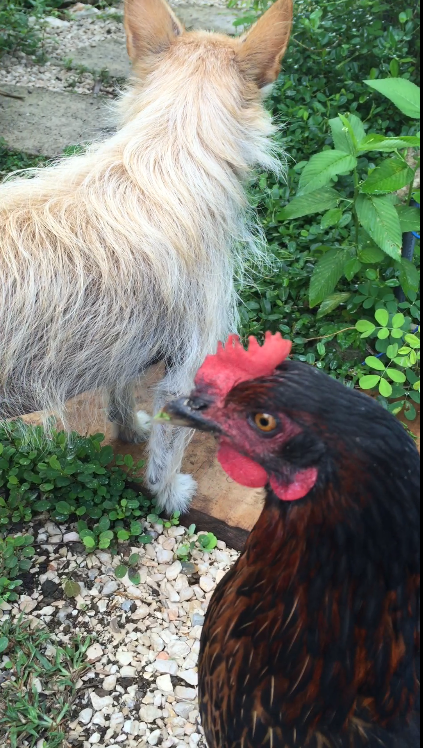
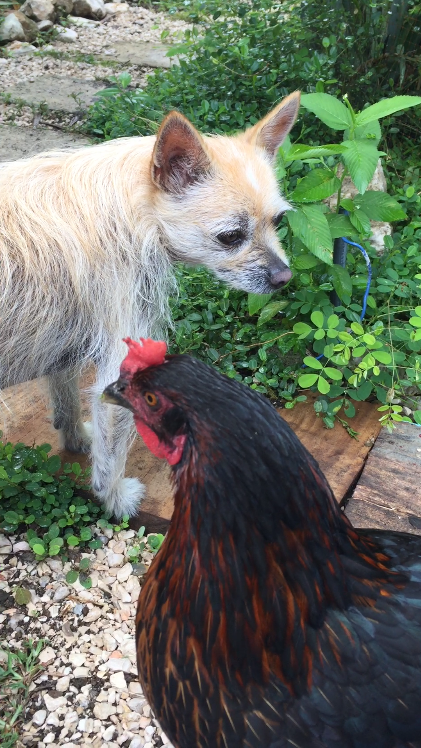
Chicken Shepherd Lulu Chillin' The facility remains a 100% pesticide/herbicide free, and grey water is recycled to the forest, therefore all toiletries must be non-toxic/organic/biodegradable. While there are very few mosquitoes at Órbitas, there are locally produced, very effective natural non-toxic repellents available in town for those venturing into town or who are particularly sensitive to bites.
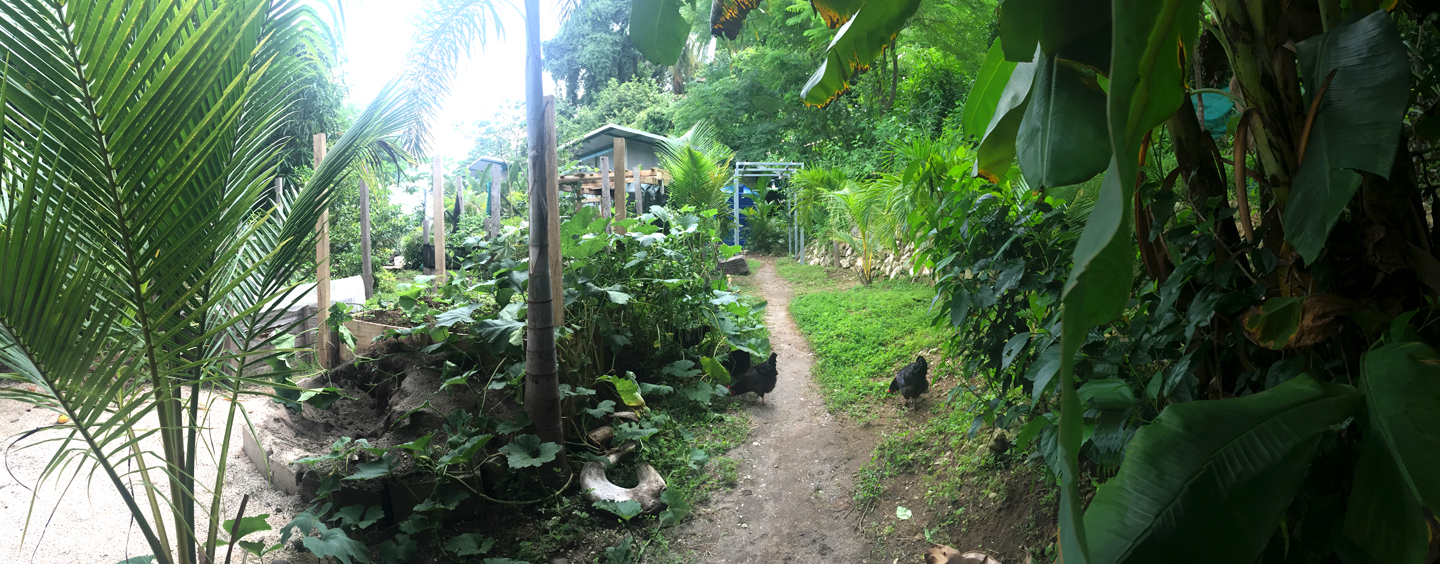
1.Entrance path and garden with gallinas (hens) Frankolina and Coco. 2.Fabiola Carranza at work during a residency with Jenifer Papararro. Foto: Jenifer Papararro.
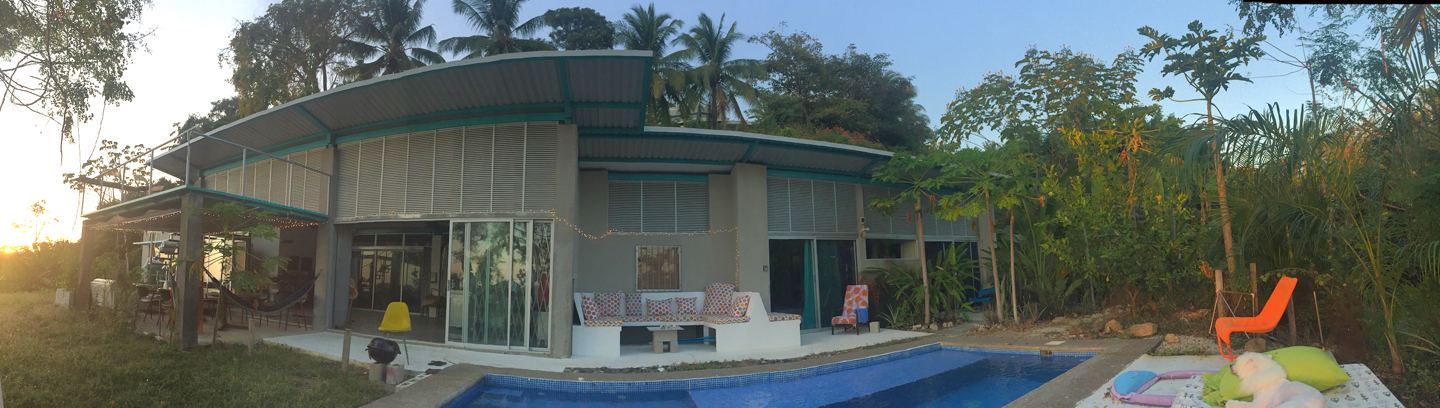
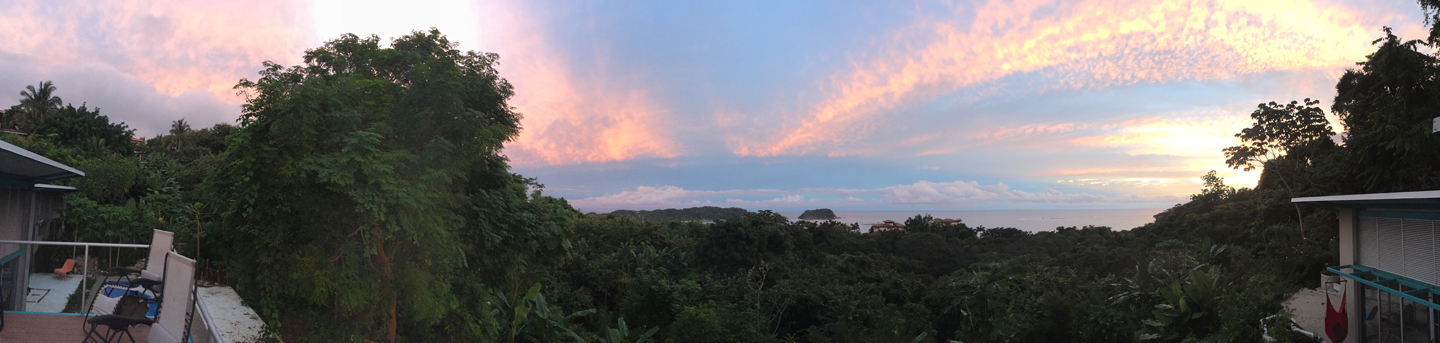
Sunset panorama photographed from upper deck.
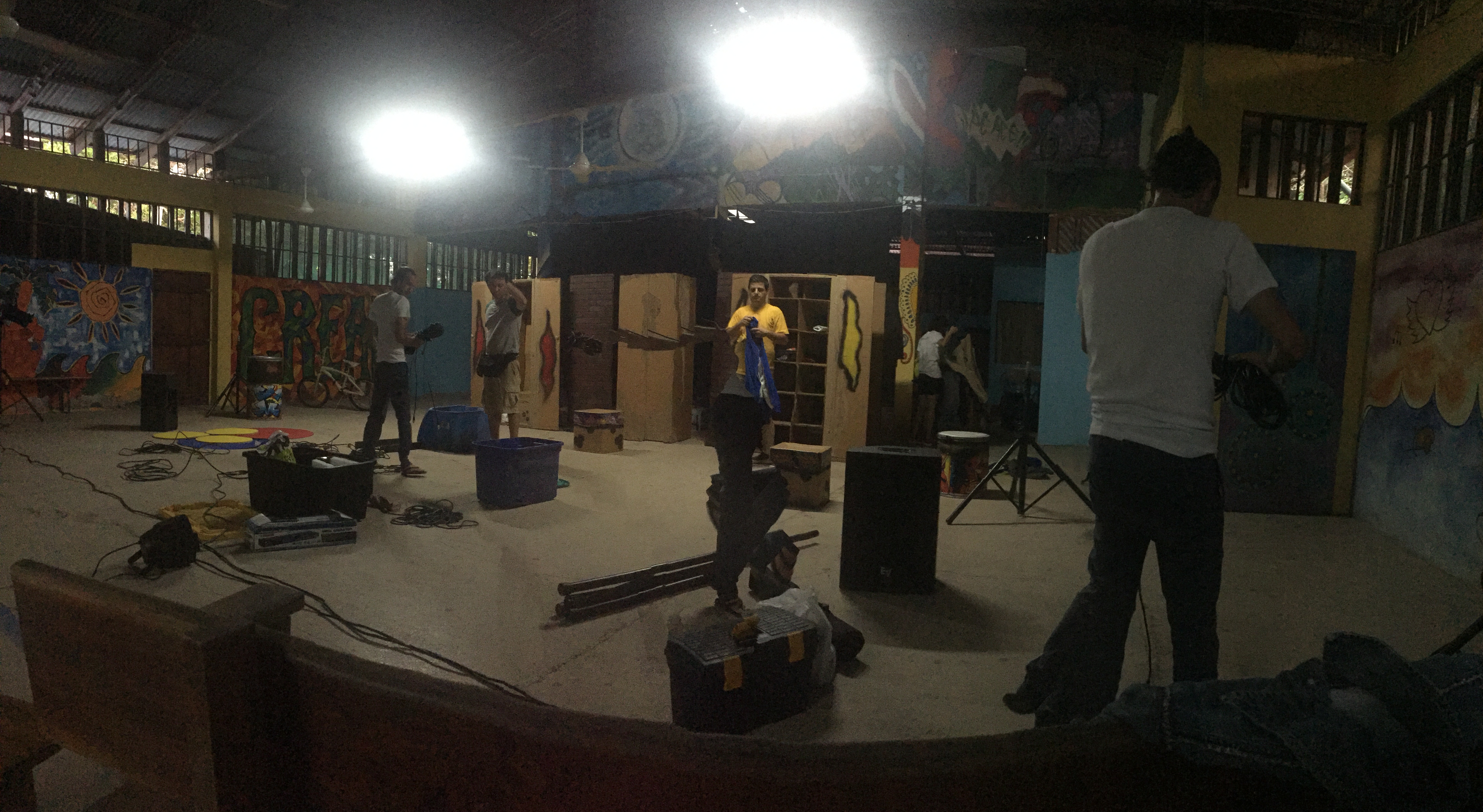
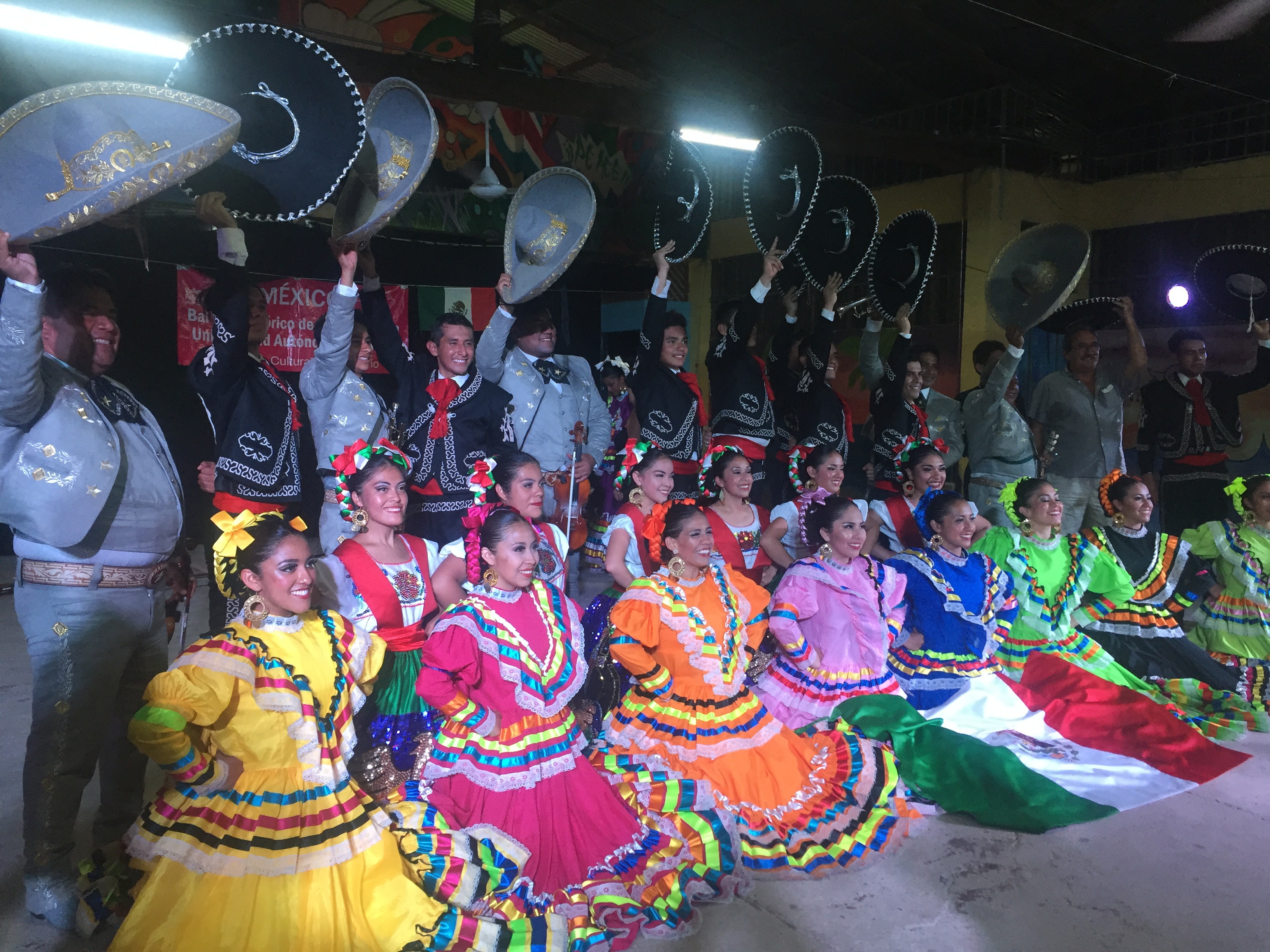
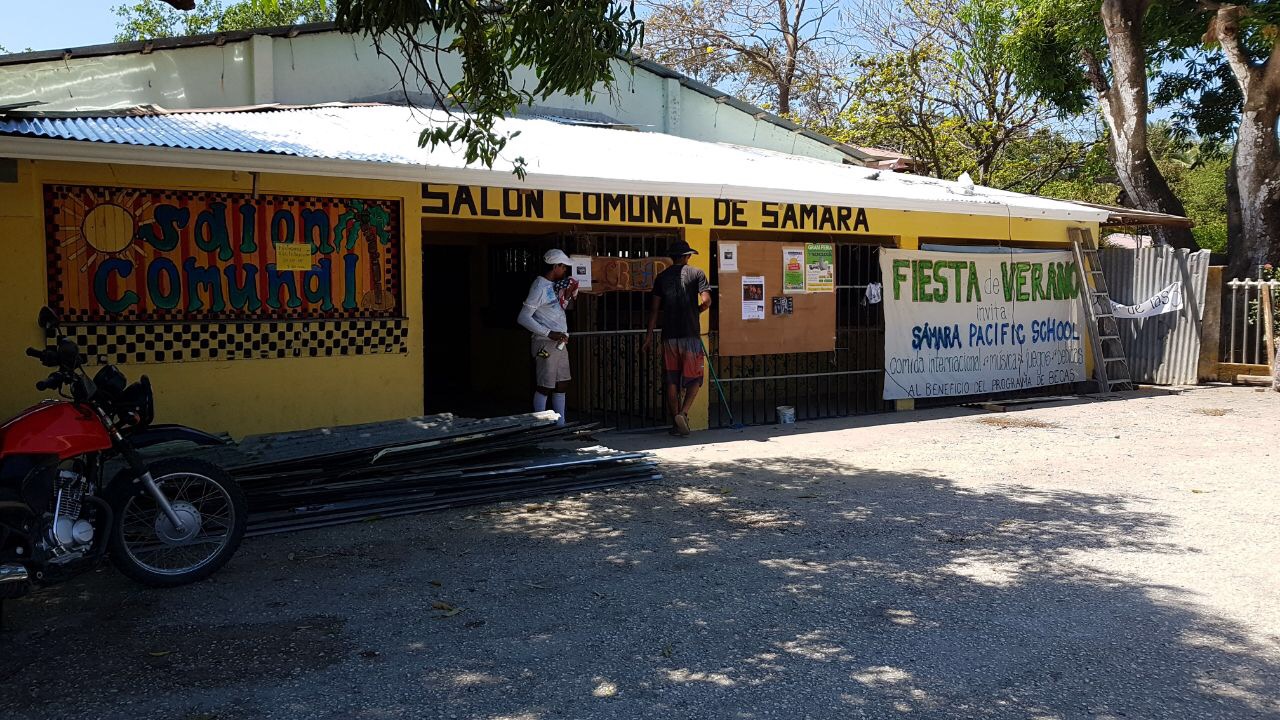
As well as work, exhibitions and events taking place at Órbitas, Fiona was part of the 8 member board of artists and musicians that made up Samara Cultura Vive!.
The group hosted Latin American Dance Festivals, local, national and international Musicians, Theatre productions.
Productions in the Samara Salon.
Samara Vive and Órbitas hosted director Brenda Rosencovicha and her Buenas Aires blind theatre company Empacho Teatro, who presented a multi-sensory, multimedia installation theatre performance.
Samara Cultura Vive! Board after party,
Orbitas welcomed International and Costa Rican creative professionals across a multitude of disciplines. Click on the image below to see the invitation page while the residency project was open.